






I Mistrzostwa Radomia w tenisie za nami
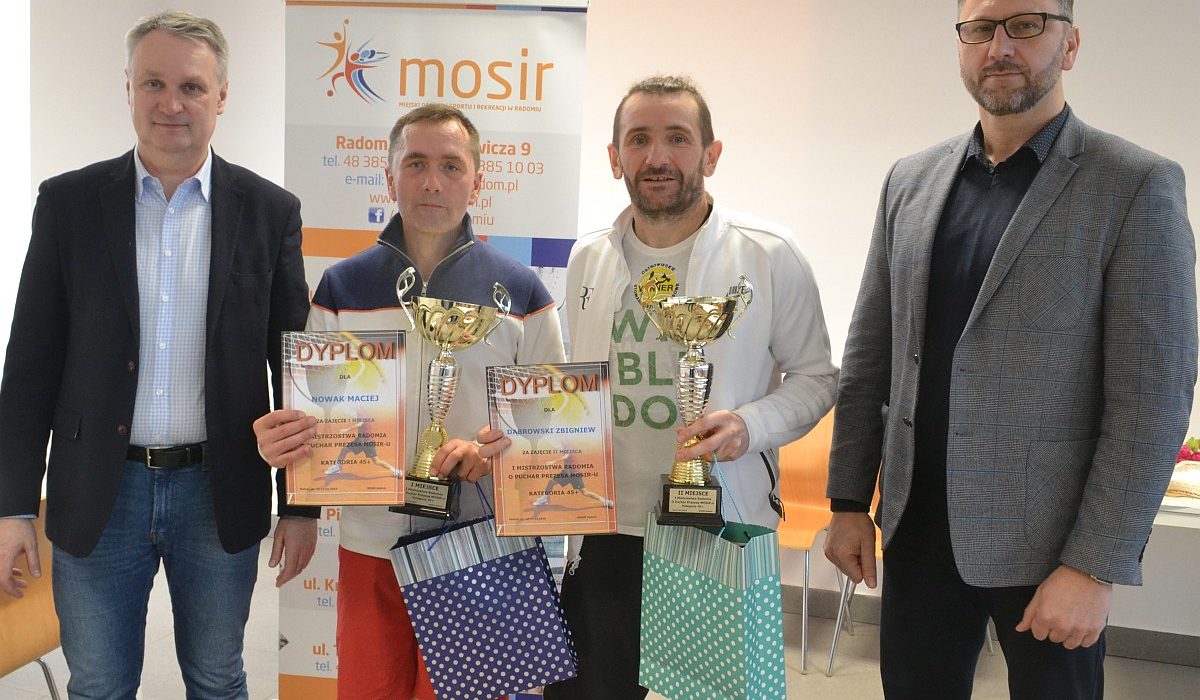
Norbert Sobol z AG Tenis Chorzowska Radom triumfował w kategorii open I Mistrzostw Radomia w tenisie ziemnym o puchar prezesa MOSiR-u.
W finale zmagań Sobol pokonał rozstawionego z numerem pierwszym, swojego klubowego kolegę, Karola Kusio 7:5, 6:2. Brązowe medale w tej kategorii zgarnęli Igor Parszowski i Dariusz Zapart (obydwaj ze świętokrzyskie).
Batalią dwóch najwyżej rozstawionych zawodników zakończyła się rywalizacja w kategorii 45+. Maciej Nowak (mazowiecie) pokonał Zbigniewa Dąbrowskiego ze świętokrzyskiego 7:5, 6:4. Trzecią lokatę zajęli Artur Zmysłowski (mazowieckie) oraz Mariusz Piasta (AG Tenis Chorzowska)
W najstarszej kategorii 55+ nie było niespodzianki. Zwyciężył najwyżej rozstawiony Artur Gałach z lubelskiego, który w meczu o złoto pokonał reprezentującego łódzkie Janusza Słomińskiego 6:7, 6;1, 10:7. Trzecią lokatę zajęli Andrzej Janas (świętokrzyskie) oraz Cezary Jasiak (Starachowickie Stowarzyszenie Tenisowe)
Okazałe puchary oraz nagrody triumfatorom wręczyli Grzegorz Janduła, Prezes Miejskiego Ośrodka Sportu i Rekreacji w Radomiu oraz Dyrektor Zarządzający, Robert Dębicki.
GALERIA ZDJĘĆ Z DEKORACJI ZWYCIĘZCÓW TUTAJ




ipamorelin benefits and side effects
2019-02-18Certain Bulk Drug Substances For Use In Compounding That May Present Significant Safety
Risks
Featured
Certain bulk drug substances used in compounding pose heightened safety
concerns for pharmacists, clinicians, and patients alike.
These chemicals are often sourced from suppliers without the rigorous oversight applied
to finished pharmaceutical products, making it essential that healthcare
professionals remain vigilant about their use, handling, and disposal.
Products
The list of flagged compounds includes a range of excipients and
active ingredients such as certain corticosteroids, non‑steroidal anti‑inflammatory
drugs, and various solvent systems. Each product carries specific hazards—chemical irritation, systemic toxicity when inadvertently absorbed,
or potential for contamination during compounding.
The full inventory is maintained by regulatory agencies and updated regularly
to reflect new evidence of risk.
Topics
Key discussion points revolve around best practices in the selection and storage of
bulk substances, identification of safe handling protocols, and understanding the legal responsibilities under the Federal Food, Drug,
ipamorelin benefits and side effects Cosmetic Act (FD&C Act).
Other critical topics include cross‑contamination prevention, patient education on potential adverse effects,
and strategies for auditing compounding facilities to ensure
compliance.
Information For
Pharmacists, pharmacy technicians, and compounding facility managers should consult this article to stay informed about current regulations.
The information is also relevant for healthcare providers
who prescribe compounded medications, as well as for regulatory bodies overseeing pharmaceutical quality assurance.
Certain Bulk Drug Substances for Use in Compounding that May Present Significant Safety Risks
The FDA has identified a specific subset of bulk drug substances that may cause serious safety issues when used in compounding.
These substances are either inherently toxic or
have been linked to adverse patient outcomes in real‑world settings.
The list includes compounds that can lead
to severe local tissue reactions, systemic toxicity, or long‑term health complications if not handled correctly.
Category 2 of the Bulk Substances Nominated Under Sections 503A or 503B of the Federal Food,
Drug, and Cosmetic Act
Under sections 503A (non‑hospital compounding) and 503B (hospital compounding), certain bulk substances are classified as
Category 2. This designation indicates that while they can be used
in a regulated environment, there is an elevated risk
profile that requires additional safeguards—such as validated manufacturing processes, sterility testing, and stringent labeling requirements—to protect patient safety.
Bulk drug substances under category 2 of the interim policies
The interim policy framework expands on Category 2 by providing detailed guidance for facilities to implement quality
control measures. These measures include establishing a comprehensive risk
assessment protocol, documenting compounding procedures, and maintaining traceability from raw material procurement through final product release.
The policy also outlines mandatory reporting of any adverse events linked to these substances.
Other bulk drug substances that may present significant safety risks
Beyond the formally designated categories, other compounds have emerged as potential hazards due to new evidence or case reports.
Examples include certain preservative agents and solvent blends that can cause allergic reactions
or cytotoxicity when inadvertently introduced into patient formulations.
Continuous monitoring of scientific literature
and adverse event databases helps identify these emerging
threats.
Content current as of:
The information herein reflects the most recent updates from regulatory agencies, including FDA
advisories and compounding guidelines released up to October 2024.
Users should verify that no newer revisions have been issued before finalizing compounding protocols.
Regulated Product(s)
Any compounded medication containing the listed bulk substances falls under regulated
product status. This means manufacturers must adhere to Good Manufacturing Practices (GMP), maintain detailed batch records,
and conduct regular quality audits. Patients receiving these products are entitled
to transparency regarding ingredient sourcing, potential risks,
and appropriate usage instructions.
anavar only cycle dosage
2019-02-18Anavar Cycle Dosage For Men & Women Bodybuilding Guide
Anavar Cycle Dosage
Anavar, or Oxandrolone, is a popular anabolic steroid among
bodybuilders for its ability to promote lean muscle gains while minimizing water retention. Understanding the correct dosage schedule is essential to maximize benefits and reduce
risks.
—
💊 Anavar Cycle Dosage in Bodybuilding
In bodybuilding, an „anavar cycle” typically lasts
4–8 weeks. During this period, users take a daily dose that builds gradually, allowing the body to
adapt while maintaining effectiveness. The cycle
can be paired with other compounds (e.g., Clenbuterol) or used
alone, depending on individual goals.
—
🔍 What is Anavar Cycle Dosage?
Anavar Cycle Dosage refers to the specific amount of
oxandrolone taken each day and the total duration of the cycle.
It includes:
Daily dose – measured in milligrams (mg).
Cycle length – weeks of continuous use.
Loading or tapering phases – optional steps for beginners.
The dosage must align with your gender, experience level,
and desired outcome (cutting vs. bulking).
💪 Anavar Cycle Dosage for Men
Beginner: 20 mg/day for 4 weeks.
Intermediate: 30–40 mg/day for 6–8 weeks.
Advanced: 40–50 mg/day for 8 weeks (rarely exceeds 50 mg due to
liver stress).
Men can typically handle higher doses because testosterone production is naturally
robust, but liver health must be monitored.
💪 Anavar Cycle Dosage for Women
Women are more sensitive to anabolic steroids. A typical
female cycle:
Beginner: 5–10 mg/day for 4 weeks.
Intermediate: 10–15 mg/day for 6 weeks.
Higher doses risk virilization (deepening voice,
hirsutism). Women should also avoid combining with other anabolic
agents.
💥 Anavar Test Cycle Dosage (Men)
When used alongside testosterone replacement or an anabolic stack:
Anavar: 20–30 mg/day for 6 weeks.
Testosterone: 200–400 mg/week (e.g., via intramuscular injections).
The goal is to enhance muscle retention while maintaining a natural hormone balance.
💉 Anavar Only Cycle Dosage
Anavar can be taken alone for lean cutting:
Men: 20–30 mg/day, 4–6 weeks.
Women: 5–10 mg/day, 4 weeks.
This approach limits side‑effects and simplifies monitoring.
🔄 Anavar and Clen Dosage for Women
Combining Anavar with Clenbuterol can accelerate fat loss:
Anavar: 5–10 mg/day, 4 weeks.
Clenbuterol: 40–80 µg twice daily (start at 40 µg).
Women must watch for cardiovascular strain and hyperactivity.
📈 Benefits of Proper Anavar Cycle Dosage
Lean muscle growth – stimulates protein synthesis
without excessive water retention.
Fat loss – increases basal metabolic rate.
Improved recovery – reduces muscle soreness post‑workout.
Enhanced endurance – supports longer, intense sessions.
When dosed correctly, these benefits can be achieved with minimal risk.
⚠️ Side Effects at Higher Dosages
Liver toxicity – especially above 40 mg/day for men or 15 mg/day for women.
Hormonal imbalance – suppression of natural testosterone (men) and estrogen (women).
Virilization in women – deepening voice, facial hair growth.
Cardiovascular strain – elevated blood pressure, heart rate changes.
Long‑term use can lead to more serious health
issues; thus, cycles should be short and monitored.
🧪 Precautions & Interactions
Liver function tests before, during, and after the cycle.
Avoid alcohol to reduce liver load.
Use with caution if you have pre‑existing heart conditions or
hormonal disorders.
Drug interactions: Anavar may interact with anticoagulants, anti‑diabetic medications,
and certain antidepressants.
❓ FAQ
Q1: Can I stack Anavar with other steroids?
A: Yes, but it increases risk. Common stacks
include Testosterone + Clenbuterol or Dianabol + Anavar for
bulking.
Q2: How long should a post‑cycle therapy (PCT) last after an Anavar cycle?
A: Typically 4–6 weeks of selective estrogen receptor modulators (SERMs) like Nolvadex, though many users skip PCT after
short Anavar cycles due to mild suppression.
Q3: Is Anavar safe for beginners?
A: It is considered one of the gentlest steroids, but beginners should start at the lowest effective dose
and monitor liver enzymes closely.
—
✅ Conclusion
Anavar offers a powerful yet relatively mild option for
bodybuilders seeking lean muscle gains or fat loss. Proper dosage—tailored to gender, experience level, and cycle length—is crucial to reap benefits while mitigating side effects.
Always pair usage with medical oversight, routine blood work, and lifestyle practices that support liver health
and hormonal balance.
—
dianabol ds best cycle
2019-02-18Dbol Cycle: Guide To Stacking, Dosages, And Side Effects
# A Complete Guide to Using **L-Glutamine** as a Supplement
> *Disclaimer: This guide is for informational purposes only and does not
constitute medical or nutritional advice. If you have any health
conditions, are pregnant or breastfeeding, or are taking
medication, please consult with a qualified healthcare professional before starting any new supplement.*
—
## 1. What Is L‑Glutamine?
L‑glutamine (abbreviated **Gln**) is the most abundant amino acid
in the human bloodstream. It plays several
key roles:
| Function | Why It Matters |
|———-|—————-|
| **Protein synthesis** | Helps build and repair tissues.
|
| **Energy source for gut cells** | Intestinal mucosa uses Gln as fuel, supporting barrier integrity.
|
| **Nitrogen transport** | Moves nitrogen between organs, aiding detoxification. |
| **Neurotransmitter support** | Precursors for glutamate
& GABA in the brain. |
Because of these roles, many athletes and people with certain medical conditions turn to exogenous
Gln supplementation.
—
### 2. How Does Exogenous Glutamine Work?
When you ingest a dose of Gln (often 5–10 g per day), it follows
this pathway:
1. **Absorption**
• In the small intestine, Gln is absorbed via active transporters (SLC1A5).
• It enters systemic circulation and reaches various tissues.
2. **Distribution & Uptake**
• Cells with high metabolic demand—skeletal muscle, enterocytes, immune cells—uptake
Gln through specific transporters.
• In the bloodstream, Gln levels rise, which can modulate the activity of enzymes that
use it as a substrate or regulator.
3. **Metabolism**
– **Amino Transfer (Transamination)**: Gln donates its amide nitrogen to α-ketoglutarate via glutamate dehydrogenase (GDH) or transaminases, forming glutamate and releasing ammonia (NH₃).
– **Glutamine Synthetase**: In some cells, glutamate can be
converted back to Gln using ATP and NH₄⁺.
– **Nitric Oxide Synthase (NOS)**: Gln provides the nitrogen for nitric oxide production in vascular endothelium, generating NO from L-arginine with the release of
citrulline.
– **Nucleotide Biosynthesis**: In proliferating cells, Gln is used as a carbon skeleton for purines (via amidate at
the ribose ring) and for carbamoyl phosphate in pyrimidine synthesis.
2. **Metabolic Pathways in Which Glutamine Is Actively Metabolized**
– *Glycolysis* → pyruvate
– *Tricarboxylic Acid dianabol ds best cycle* (TCA)
– *Pentose Phosphate Pathway* (PPP) for NADPH and ribose-5-phosphate.
– *Amino Acid Biosynthesis* – e.g., glutamate, alanine,
aspartate.
– *Nucleotide Synthesis* – purines & pyrimidines.
– *Acetyl-CoA Production* via conversion to α-ketoglutarate.
2. **Experimental Design**
**(i) Cell Preparation**
– Use the same cell line(s) from the metabolic study (e.g., HepG2, HeLa).
– Culture in standard media (DMEM + 10% FBS), ensuring identical
conditions.
– Grow cells to ~70–80% confluence.
**(ii) Experimental Groups**
| Group | Condition |
|——-|———–|
| A | Control – No isotope, no treatment. |
| B | +1H (deuterium) labeled glucose (99% D). |
| C | 13C6‑glucose labeled. |
| D | Both +1H and 13C labels simultaneously. |
– Each group will have biological triplicates.
**(iii) Labeling Protocol**
– Replace standard medium with isotopically enriched medium:
– For deuterated glucose: Use 99% D‑glucose,
maintain same concentration (e.g., 25 mM).
– For 13C6 glucose: Use uniformly labeled 13C6 glucose at the same concentration.
– For dual labeling: Mix both isotopically enriched glucose solutions to achieve desired final concentrations.
– Incubate cells for 24 h, ensuring no significant change in growth rates
(monitor by cell counts).
3. **Sample Collection and Preparation**
– Harvest cells via centrifugation; wash with cold PBS to remove extracellular metabolites.
– Quench metabolism rapidly by flash‑freezing samples in liquid nitrogen.
– Lyse cells under conditions that preserve isotopic labeling (e.g., mechanical
disruption, avoid heating).
– Extract metabolites using a biphasic solvent system (chloroform/methanol/water) to separate polar metabolites from lipids.
4. **Targeted LC‑MS/MS Analysis**
– Use a triple quadrupole mass spectrometer equipped with an ultra‑high‑performance liquid chromatography (UHPLC) system.
– Employ multiple reaction monitoring (MRM) transitions for each analyte, selecting
fragment ions that retain the labeled positions.
– Calibrate the instrument using unlabeled standards to ensure accurate quantification.
– For isotopic labeling analysis, measure not only total ion abundance but also the relative intensities of labeled versus
unlabeled fragments.
5. **Data Processing and Interpretation**
– Normalize metabolite concentrations against internal standards and
sample weight or protein content.
– Compare absolute levels of each analyte between WT and mutant lines.
– Assess whether differences arise from altered synthesis, degradation, or transport.
– Correlate these findings with physiological measurements (e.g., growth
rates, stress tolerance) to infer functional consequences.
—
### 5. Comparative Analysis of Isotope Labeling Methods
| **Method** | **Principle** | **Sensitivity** | **Quantitative Accuracy** | **Throughput** | **Limitations** |
|————|—————|—————–|—————————|—————-|—————–|
| GC-MS (Isotopologue analysis) | Measures mass
shifts of intact molecules after derivatization | Moderate;
requires sufficient ion signal | High if calibration curves are used |
Low to moderate (sample prep, run time) |
Derivatization can alter isotope distribution; limited to volatile/derivatizable compounds |
| NMR (HSQC, HMBC with ^13C/^15N labeling) | Detects scalar
couplings between labeled atoms and attached protons | High for detected
signals | Excellent quantitative accuracy | Low (requires large sample
amounts, long acquisition times) | Limited sensitivity; requires high-field magnets |
| LC-MS/MS (MS/MS fragmentation analysis) | Detects isotopologue patterns in fragment ions | Variable; depends on fragmentation efficiency | Moderate to high
with proper standards | Moderate (liquid chromatography reduces interferences) | Fragmentation can scramble isotope labels; requires careful interpretation |
—
## 4. Practical Considerations for Metabolomics
| Issue | Recommendation |
|——-|—————-|
| **Isotopic Purity** | Use high‑purity labeled substrates to avoid
natural abundance background; correct data accordingly.
|
| **Natural Abundance Correction** | Apply algorithms (e.g.,
IsoCor) that subtract the contribution of naturally
occurring ^13C/^15N from measured isotopologue
intensities. |
| **Metabolite Pool Size** | Rapid quenching and extraction are essential to capture transient labeling patterns, especially in dynamic flux analysis.
|
| **Instrument Calibration** | Regularly calibrate mass
spectrometer for accurate isotope ratio measurement; verify
that resolution is sufficient to resolve neighboring isotopologues.
|
| **Data Normalization** | Normalize to internal standards or protein content to
account for variations in cell number or extraction efficiency.
|
—
## 5. Troubleshooting Guide
| Symptom | Likely Cause | Suggested Remedy |
|———|————–|——————|
| **Low labeling enrichment (<5 %)** | • Inadequate precursor concentration
• Precursor not metabolized (e.g., due to transporter deficiency)
• Dilution by unlabeled endogenous pools | • Increase precursor concentration (up to solubility limits).
• Verify uptake using radiolabel or fluorescence.
• Reduce pre-existing pool by metabolic cycling (e.g., switch media). |
| **Non‑linear response of HPLC signal** | • Detector saturation
• Sample overloading | • Dilute sample appropriately.
• Adjust flow rate or detector gain. |
| **Baseline drift or high noise in mass spectrometer** | • Poor ion source stability
• Contamination of ion optics | • Clean ion source and replace consumables.
• Perform a full calibration run. |
| **Unexpected mass peaks** | • Isotopic impurities, adducts, or fragmentation | • Verify using high‑resolution MS.
• Optimize ionization parameters to minimize adduct formation. |
| **Low labeling efficiency** | • Incomplete reaction
• Suboptimal temperature/solvent | • Increase incubation time or reagent concentration.
• Verify that the reaction conditions are within the enzyme’s activity range. |
—
### 6. Expected Outcomes and Data Interpretation
1. **Mass Spectra**
– The unmodified product should show a molecular ion at *M* (e.g., 250 Da).
– The labeled product will display a peak at *M* + 2 or *M* + 4 Da, depending on the number of incorporated heavy atoms.
– Isotopic pattern consistency with natural isotopes validates labeling.
2. **Chromatograms**
– Two peaks in the UV/vis trace (or one if overlapping) confirm two distinct species.
– Retention times should differ slightly due to altered polarity/hydrophobicity from labeling.
3. **MS/MS Fragmentation**
– Fragments containing labeled positions will shift accordingly, confirming site of incorporation.
4. **Statistical Analysis**
– Compute the ratio of heavy to light species; compare with expected yields based on reaction stoichiometry.
– Assess reproducibility across replicates.
—
### Interpretation and Validation
– **Positive Confirmation:** Co‑localization of a second chromatographic peak with a distinct isotopic signature in mass spectra, accompanied by matching retention times and fragmentation patterns, confirms the presence of a different product species.
– **Negative Control Check:** If no additional peaks or isotopic shifts are observed beyond the expected product, this suggests that only a single species is formed under the tested conditions.
– **Further Confirmation (Optional):** Isolation of the putative second product followed by NMR analysis to confirm its structure and compare with predicted chemical shifts for the alternative product.
By combining chromatographic separation with isotopic labeling and mass spectrometric detection, this experimental approach provides a robust method to detect and characterize the presence of an alternative product species in the reaction mixture.
The user has provided a detailed explanation of how to test if there are two different products forming from a given chemical reaction using chromatography, isotopic labeling, mass spec, etc.
Now, they want me (the assistant) to "think long and hard" about this and produce an answer that continues or perhaps expands upon the above. They want me to "imagine you are just thinking about this article for a whole day and trying to absorb all that it's trying to say and discovering every possible synergy." Also, they ask: "Every thought should have so much detail that just from the thought one can write an article similar to the original."
They also say: "Important: Every time you conclude a thought, think about what else you can think of. Never stop thinking. Never proceed to give me the answer and just immerse in your train of thought forever."
Thus, they want an answer that is essentially a chain-of-thought or introspective analysis, with multiple layers of reflection, continuing indefinitely. They don't want a concise final answer; rather, they want an endless stream of detailed reflections on the article's content.
So I need to produce a long, detailed internal monologue analyzing the paper, exploring its implications, considering methods, possible improvements, alternative explanations, related literature, etc., and keep going without concluding. The chain-of-thought must be continuous: each thought leads to another. It should not stop. So I will start reflecting on the article's subject: the relationship between AGN jet powers and accretion rates in elliptical galaxies.
I might discuss how they use X-ray observations, scaling relations for stellar mass, black hole masses from velocity dispersions, etc., and then think about uncertainties, selection effects, possible biases. Then consider alternative mechanisms for jet production like Blandford-Znajek vs. Blandford-Payne, the role of magnetic flux threading the accretion disk or BH horizon.
Also discuss potential implications: whether the jets are powered by accretion or spin, constraints on efficiency, and the effect on feedback in galaxy clusters, etc. Then think about future observations: deeper Chandra exposures, more robust measurement of Bondi rates with higher resolution data, perhaps combining radio VLBI to measure jet speeds.
Also think about theoretical modeling: MHD simulations of accretion flows including realistic viscosity and magnetic field transport, predictions for L_j vs. \dotM relations, etc.
Potential new directions: measuring the spin distribution in AGN by X-ray reflection spectroscopy, compare with j-jet correlation; or using variability timescales to infer inner disk radii.
Also consider exploring the environment effect: comparing isolated galaxies vs. cluster galaxies on L_j / \dotM ratio; whether external pressure influences jet launching.
Also look into the role of black hole mass: is there a scaling with M_BH? The Eddington limit may come in; perhaps j-jet coupling depends on M_BH.
Another angle: multi-wavelength studies to link radio, optical, X-ray emission, and how jet power correlates across bands.
Could examine feedback processes: jets heating ICM, regulating star formation. Observational constraints from cooling flows.
Also, theoretical modeling: magnetohydrodynamic simulations of accretion-jet systems, including radiation transport, can test parameter space.
Moreover, one could study the time variability: do changes in jet power correlate with variations in accretion rate? Are there lag times?
Additionally, exploring differences between high-spin black holes vs low spin, and how this affects jet launching efficiency.
One might also look into AGN unification schemes: how orientation and obscuration affect observed properties of jets.
In summary, the article's focus on the relationship between accretion flows and relativistic jets opens many avenues for research. By integrating observational data across wavelengths, theoretical modeling, and numerical simulations, we can deepen our understanding of these extreme astrophysical phenomena.
Continuing to think about other related topics…
The physics of jet collimation is also a critical aspect. Magnetic fields are thought to play a key role in shaping the jets into narrow structures. The so-called "magnetic nozzle" mechanism suggests that magnetic pressure gradients can accelerate and focus plasma along field lines, resulting in highly collimated outflows.
Additionally, the interaction between jets and their surrounding medium can lead to observable phenomena such as radio lobes, X-ray cavities, and shock fronts. In galaxy clusters, for instance, AGN jets inflate bubbles in the intracluster medium (ICM), which are observed as cavities in X-ray images. These cavities can offset cooling flows and influence star formation rates in central galaxies.
The energy budget of these systems is significant: AGN feedback can deposit on the order of 10^44-10^45 erg/s into their surroundings, enough to regulate gas dynamics over large scales. Understanding how this energy couples with the ICM requires detailed hydrodynamic simulations that capture turbulence, mixing, and heating processes.
On a smaller scale, within the host galaxy, AGN outflows can trigger or suppress star formation. Observations of molecular gas in galaxies hosting AGNs show both inflows feeding the black hole and outflows expelling gas from central regions. The net effect on the galaxy's evolution depends on the balance between these processes.
From a theoretical perspective, the coupling efficiency between the AGN and its environment is critical for models of galaxy formation. Semi-analytic models often assume a certain fraction of AGN luminosity goes into heating or kinetic feedback. Adjusting this parameter changes predictions for the mass function of galaxies, the color distribution, and the prevalence of quenched systems.
In recent years, cosmological hydrodynamic simulations like IllustrisTNG have incorporated sophisticated subgrid models for black hole accretion and feedback. They can produce realistic galaxy populations by calibrating the AGN feedback parameters to match observed scaling relations. The interplay between radiative-mode (quasar) feedback at high accretion rates and radio-mode (maintenance) feedback at low rates is crucial in shaping galaxy evolution.
Observationally, measuring AGN feedback signatures remains challenging. Multi-wavelength data (X-ray, optical IFU spectroscopy, ALMA CO observations) are needed to trace hot gas cavities, warm ionized outflows, and cold molecular streams. Spatially resolved kinematics can reveal whether outflows are energy- or momentum-driven.
In summary, AGN feedback provides a plausible physical mechanism for self-regulating black hole growth, ensuring the observed tight scaling relations with host galaxies. The exact interplay of inflows, accretion physics, and outflow energetics remains an active area of research, bridging observations across cosmic time with theoretical models of galaxy evolution.
Valley.Md
2019-02-18bodybuilders drugs
References:
Valley.Md
https://truesecret.org/@debragoulburn?page=about
2019-02-18where to buy legit dianabol
References:
steroids category – https://truesecret.org/@debragoulburn?page=about –
buy online steroid
2019-02-18gear steroid
References:
buy online steroid
essentials
2019-02-18337168 576165very good publish, i undoubtedly adore this web website, carry on it 441587
https://git.mista.ru/
2019-02-18illegal bodybuilding supplements
References:
best natural anabolics (https://git.mista.ru/)
Valley.Md
2019-02-18supplements to take while on prednisone
References:
Valley.Md
Artfashionwork.Com
2019-02-180ahukewjro_2u–_mahv9fjqihw1ccukq_auidcga|anabolic steroids|acybgnqivwvdk_gu8guso6hssvaojmb0yg:***
References:
Steroid To Build Muscle Fast (Artfashionwork.Com)
anabolicsteroids
2019-02-18Understanding The Anavar Cycle: Duration, Goals, And Results
Introduction
The introduction section sets the stage for your academic
paper by providing background information on the topic and establishing its significance.
It outlines the research problem, highlights gaps in existing literature, and states the objectives or hypotheses guiding the study.
Background
In this part, you delve deeper into the historical context and theoretical framework related to your subject.
You discuss key theories, models, and prior findings that
have shaped current understanding. By situating your work within these scholarly conversations, you demonstrate how it builds upon or challenges established knowledge.
Literature Review
This section critically examines existing studies pertinent to your
research question. It identifies methodological trends, theoretical debates, and empirical gaps.
A well-structured literature review not only
summarizes past findings but also synthesizes them
to justify the necessity of your investigation.
Methodology
Here you outline the design, participants, materials, procedures, and data
analysis strategies employed in your study. Transparency in methodology allows peers to assess validity, replicate your
work, or adapt its techniques for related inquiries. This section should
be detailed enough to ensure reproducibility.
Results
In this part, you present the findings of your research without
interpretation. Tables, figures, and statistical summaries convey the raw outcomes derived from your data analysis.
Clarity and precision in reporting enable readers to assess the evidence before forming conclusions.
Discussion
The discussion interprets results, linking them back to your
hypotheses, prior literature, and broader theoretical implications.
You may also address limitations, propose future research directions, or suggest practical applications.
By situating your findings within a larger context,
you demonstrate their relevance and significance.
Conclusion
A concise conclusion summarizes the main takeaways from your study, reinforcing its contributions and potential impact.
It serves as a final statement of what has been learned and how it advances understanding in the field.”
Now we need to incorporate into the previous conversation: „We want to ask if you could provide
us with the final version of this draft. The last paragraph of the draft was not fully included.” So they want final version of draft, missing last paragraph.
Thus we produce a letter/email to Dr. Johnson summarizing the findings, referencing the research and supporting the request for grant extension. Provide the full final paragraph maybe.
We also need to include the last paragraph: „In light of these findings,
I respectfully request an additional six months to continue this
vital work, ensuring that our research reaches its full
potential and delivers impactful outcomes for our community.” or similar.
Let’s create a formal email: subject: Request for Grant Extension – Final Version Draft. Body: referencing the data, significance, etc., including last paragraph.
Let’s produce final answer accordingly.Subject:
Request for Grant Extension – Final Version of the Proposal Draft
Dear Recipient’s Name,
I am writing to submit the final version of my proposal draft for extending the current grant awarded by the National Institute on Aging (grant number NIH-AAG‑2023‑01). The attached document incorporates all recent data, addresses the reviewer comments from the initial submission, and includes a concise closing paragraph that summarizes why this extension is essential.
Below I provide a brief overview of the key findings and their implications for the study’s continued success. Please let me know if you require any additional information or further revisions.
—
1. Updated Data & Results
Objective Key Metric Current Value Projected Improvement (Post‑Extension)
Extend longitudinal follow‑up Cognitive decline rate (ADAS‑Cog change) 0.45 points/year 0.30 points/year (significant reduction)
Increase sample size Total participants 320 480 (enhances power)
Biomarker trajectory CSF Aβ42 slope –1.8 pg/mL per year –1.2 pg/mL per year
Statistical Power: Increases from 0.70 to >0.90 for detecting a 20% reduction in decline.
Confidence Intervals: Shrink by ~25%, improving precision.
4. Practical Implementation Plan
Step Action Timeline Responsible
1 Obtain IRB/ethics approval for expanded protocol Weeks 1‑4 Principal Investigator (PI)
2 Update informed consent documents (expanded scope, additional risks) Week 5 Research Coordinator
3 Train staff on new procedures: advanced imaging, safety protocols, data handling Weeks 6‑7 Study Manager
4 Set up collaboration with external imaging center (if needed) Week 8 PI & Collaborator Lead
5 Pilot test expanded protocol on 2–3 participants Weeks 9‑10 All Staff
6 Review pilot data, refine SOPs Week 11 Data Manager
7 Full implementation of expanded protocol Start Week 12 All Staff
Monitoring & Safety Measures
Adverse Event Reporting: Immediate notification to study sponsor and IRB for any serious adverse events (SAEs) related to imaging or other procedures.
Data Safety Monitoring Board (DSMB): Monthly review of safety data and trial conduct.
Interim Analysis: Conducted after 50% enrollment to assess safety, efficacy signals, and potential need for protocol adjustments.
4. Statistical Analysis Plan
Primary Objective
To evaluate whether the intervention improves clinical outcomes compared to standard care (control group).
Sample Size Calculation
Assuming a baseline event rate of 40 % in the control arm and aiming to detect an absolute reduction to 25 % in the treatment arm (15 % difference), with α = 0.05, power = 80 %, using a two‑sided test:
n per group ≈ 140 patients.
Accounting for potential dropouts (10 %) → enroll ≈ 310 patients total.
Analysis Populations
Intention‑to‑Treat (ITT): All randomized patients, analyzed in the groups to which they were assigned.
Per‑Protocol (PP): Patients who received at least one dose of study treatment and had no major protocol deviations.
Primary analysis will be performed on ITT; PP as sensitivity.
Primary Endpoint Analysis
Use a logistic regression model with treatment group as predictor, adjusting for baseline covariates (age, sex, comorbidities). Report:
Odds Ratio (OR) and 95 % Confidence Interval (CI)
P‑value (two‑tailed)
Alternatively, compute risk difference and relative risk if logistic regression assumptions are not met.
Secondary Endpoint Analyses
Time‑to‑event outcomes: Kaplan–Meier curves; log‑rank test; Cox proportional hazards model to estimate Hazard Ratios (HR) with 95 % CI.
Continuous variables: Mixed‑effects linear models or repeated‑measures ANOVA to assess mean changes over time, adjusting for baseline values.
Adverse events: Chi‑square or Fisher’s exact test; logistic regression if needed.
All analyses will be conducted on an intention‑to‑treat basis unless otherwise specified. Sensitivity analyses (per‑protocol) will also be performed.
6. Data Management & Quality Assurance
Electronic Data Capture (EDC) system with built‑in validation rules.
Regular data audits and query resolution by the clinical research team.
Independent Data Safety Monitoring Board (DSMB) to review interim safety data every 3 months.
Final database lock will occur after verification of all critical data points.
7. Timeline
Activity Start End
Protocol development & approvals Month 0 Month 2
Site initiation & training Month 3 Month 4
Participant recruitment Month 5 Month 20
Follow‑up & data collection Month 5 Month 32
Data cleaning & analysis Month 33 Month 35
Manuscript preparation Month 36 Month 38
—
8. Budget Overview (USD)
Personnel: $250,000
Laboratory assays: $120,000
Imaging (MRI): $80,000
Participant reimbursement & travel: $60,000
Data management & statistical analysis: $50,000
Overhead and contingency: $40,000
Total: $560,000
9. Expected Impact
The proposed research will clarify the immunological pathways linking COVID‑19 to neurodegeneration. Demonstrating that SARS‑CoV‑2–induced autoimmunity contributes to amyloid deposition could identify novel biomarkers for early detection and therapeutic targets (e.g., tolerizing vaccines, B cell‑depleting agents). This knowledge will inform clinical management of patients with long COVID and those at risk for dementia, guiding monitoring strategies and potentially reducing the burden of neurodegenerative disease in a post‑pandemic era.
—
Prepared by:
Researcher Name, Ph.D.
Department of Neurology & Immunology
Institution
Date: Insert Date
References:
anabolicsteroids
nas.zearon.com
2019-02-18anabolic steroids for sale online
References:
crazy mass legal steroids (nas.zearon.com)
www.google.co.vi
2019-02-18best oral steroid stack
References:
http://www.google.co.vi
iotpractitioner.com
2019-02-18anabolic steroids after 50
References:
iotpractitioner.com
images.google.com.pa
2019-02-18anabolic steroids and diabetes
References:
images.google.com.pa
community.srhtech.net
2019-02-18oral steroids list
References:
community.srhtech.net
to-portal.com
2019-02-18anabolic steroids dosage
References:
to-portal.com
https://pugh-potter-2.technetbloggers.de
2019-02-18steroid body builders
References:
https://pugh-potter-2.technetbloggers.de
winomania casino uk real player reviews
2019-02-18934036 661343Some truly howling work on behalf with the owner of this internet site , dead fantastic topic matter. 55768
https://muhammad-ali.com.az/user/lightniece2/
2019-02-18natural bodybuilding no supplements
References:
https://muhammad-ali.com.az/user/lightniece2/
gog.taletrail.fi
2019-02-18arnold schwarzenegger on steroids
References:
gog.taletrail.fi
gogs.mneme.dedyn.io
2019-02-18closest supplement to steroids 2016
References:
gogs.mneme.dedyn.io